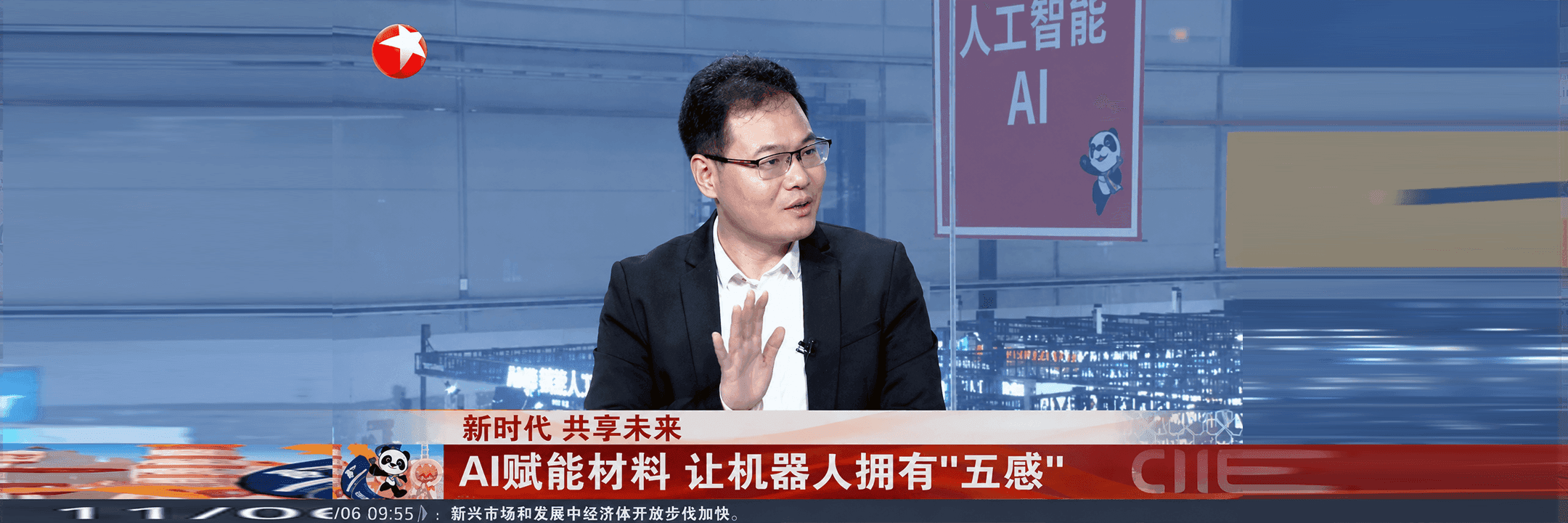
TG0 CTO and co-founder Dr. Liucheng Guo was invited to appear on Dragon TV (China's BBC) for a special segment broadcasting from The Chinese International Import Expo (CIIE) in Shanghai.
AI Has Brains and Eyes, But No Sense of Touch
We think of AI as an all-knowing brain or a set of all-seeing eyes. But for all its intelligence, AI has been numb — it can't feel.
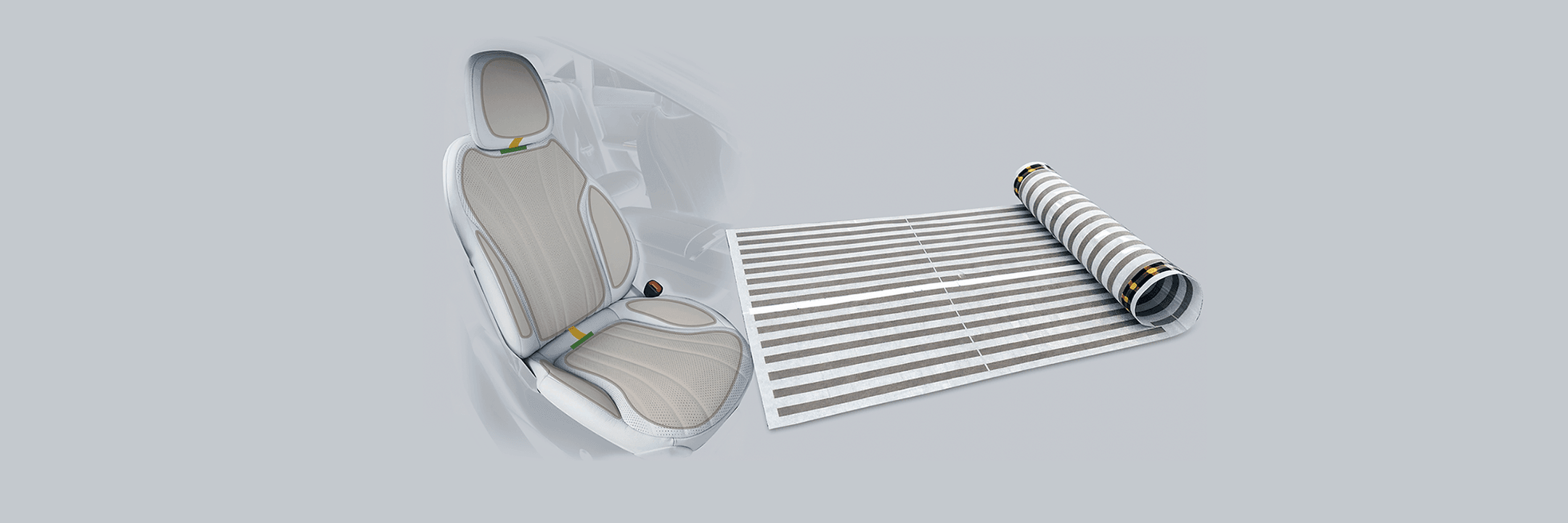
What if your car seat didn't just heat up, but actually sensed your posture and fatigue? What if a robot could give you a genuinely gentle handshake?
At the recent CIIE, TG0's Co-founder and CTO, Guo Liucheng, spoke about how TG0 is solving one of AI's biggest missing pieces: the sense of touch.
The "Third Sense": How It Works
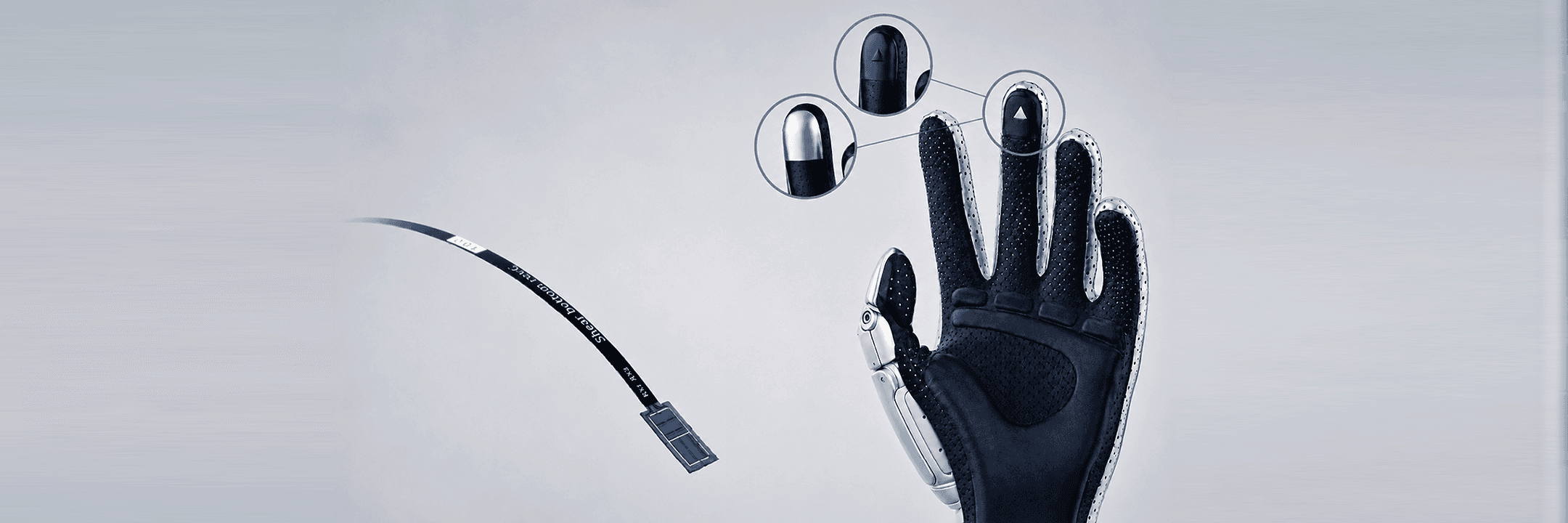
After a decade of development (five years in R&D, five in commercialisation), TG0 has created proprietary AI algorithms that read and analyse the tiny signal changes *within* existing materials. This low-cost, low-power approach effectively turns any material — plastics, rubber, glass, metal, and even soft fabrics — into a smart sensor.
As Guo puts it, the vision is simple: **"Touch is sensing, all things are interactive."**
Applications
**Truly Smart Cars:** A car interior that is completely sensory — your seat could recognise your specific posture to provide a customised massage, or detect driver fatigue. The technology can also be used in infant seats to adaptively sense a child's state and alert parents.
**Gentler, Safer Robots:** This technology gives robots a "skin." For the first time, they can understand force and subtlety — allowing them to perform delicate tasks or give a safe, firm, human-like handshake, making them truly collaborative partners.
Credentials
TG0 is a deep-tech company jointly incubated by the Royal College of Art and Imperial College London. The company has been selected for the UK's Future 50 programme, invited to 10 Downing Street to showcase its innovation, and is a recent GBx Best in British Tech award winner. Dr. Guo is an Industrial Fellow of the Royal Academy of Engineering and holds a PhD from Imperial College London and a Master's from Peking University.
For Guo, bringing this technology to CIIE closed a loop — ten years earlier, as a student representative, he made a promise to one day bring knowledge and technology from the UK back to a global scale.